


How to Choose a Bilingual Preschool in Geneva
Choosing a bilingual preschool in Geneva can feel overwhelming. The city offers public schools, international schools and small private bilingual options, each with very different approaches. This guide walks you through the key questions to ask so you can find a preschool that truly fits your child and your family’s plans.
Clarify your family’s situation and goals
Before comparing schools, it helps to define your context:
How old is your child, and for how many years do you expect to stay in Geneva?
Do you want your child to follow mainly the Swiss system in French, or to keep doors open for international or French schools later?
How important is day‑to‑day English for your family (one parent native, both non‑native, returning from abroad, etc.)?
Writing this down makes it easier to evaluate whether a school’s language model and curriculum really match your needs.
Understand what “bilingual” means in Geneva
“Bilingual” can describe very different realities. When you visit schools, ask:
How is time split between French and English over the week (true 50/50, or mainly French with some English sessions)?
Are there native speakers in each language in the classroom, so children hear authentic accents and vocabulary every day?
Which curricula does the school follow (for example, the Plan d’Études Romand / Swiss PER, plus elements of the English National Curriculum or another international programme)?
A strong bilingual preschool will combine clear academic progression in French with rich, meaningful exposure to English, not just isolated “English lessons”.
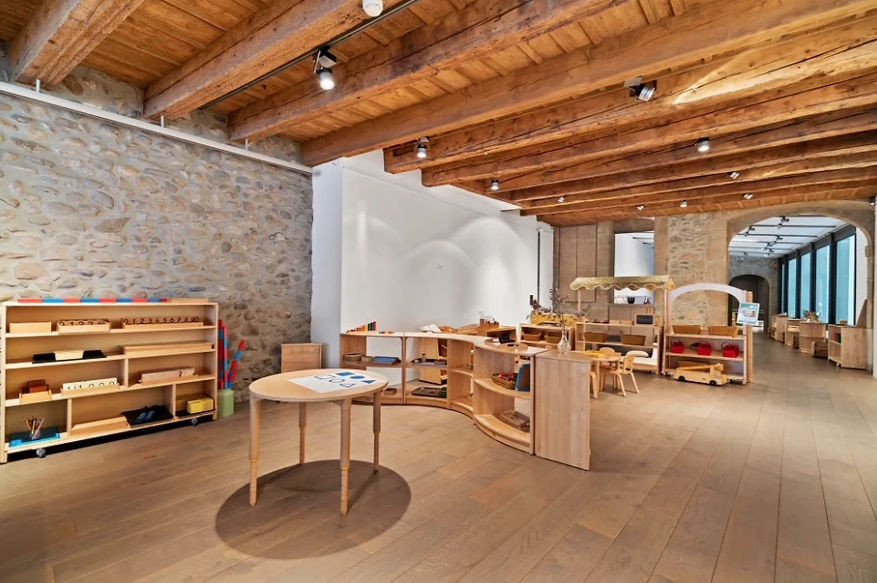

Look closely at pedagogy and class size
The educational approach has a huge impact on your child’s well‑being, especially between 2 and 6 years old.
Ask whether the preschool is inspired by Montessori, Reggio Emilia or other active pedagogies, or whether it follows a more traditional model.
Observe how much children move, choose activities and manipulate real materials versus sitting in a group.
Check the maximum group size and adult–child ratio. Small classes with more adults allow better language support, smoother transitions for expat children and closer relationships with families.
During your visit, notice the atmosphere: Are children calm and engaged? Do adults speak respectfully to them? Do you hear both languages used naturally?


Practical questions specific to Geneva
Geneva also has some very practical points to consider:
Location and access – Is the school in the Old Town, in a residential area, or near your work? How easy is it to reach by public transport, walking or bike?
Schedule and holidays – Check daily hours, options for early drop‑off or late pick‑up, and how the school handles Swiss holidays and Wednesday afternoons.
Meals and outdoor time – Ask about lunch, snacks, allergies and how often children go outside (courtyard, nearby park, forest school outings, etc.).
Fees and employer support – Some employers contribute to preschool fees; it is worth asking both the school and your HR department.
A good bilingual preschool will be transparent on all these points and happy to answer detailed questions.


Why many families choose La Nouvelle École Geneva
In the heart of Geneva’s Old Town, La Nouvelle École offers a bilingual French–English preschool and early primary programme from age 2. Children learn in small groups, with roughly one adult for every six children, which makes it easier to support language development and individual needs.
The curriculum blends the Swiss Plan d’Études Romand with elements of international programmes, and is delivered by highly qualified teachers, including staff with Masters in Education. Native French‑ and English‑speaking teachers and assistants provide authentic models in both languages, helping children gain clear pronunciation and confidence when speaking.
The Geneva campus combines the charm of the Vieille‑Ville with easy access to green spaces, regular nature outings and cultural visits. Daily life also reflects the school’s eco‑humanitarian values, with projects that encourage children to care for others and for the planet. Families can extend bilingual learning through after‑school activities and holiday camps open to both enrolled and external children.
How to prepare your visit and enrolment
Once you have shortlisted a few schools:
Book in‑person visits and observe a real morning in class if possible.
Prepare a list of questions about language use, transitions into the Swiss or international systems, support for non‑French‑speaking children and communication with parents.
After each visit, note how your child reacted and how you felt about the team and environment.
If you would like to discover La Nouvelle École Geneva, you can book a tour, request a trial morning or schedule a call with the leadership team to discuss your child’s situation and your plans for the next few years.


Comments